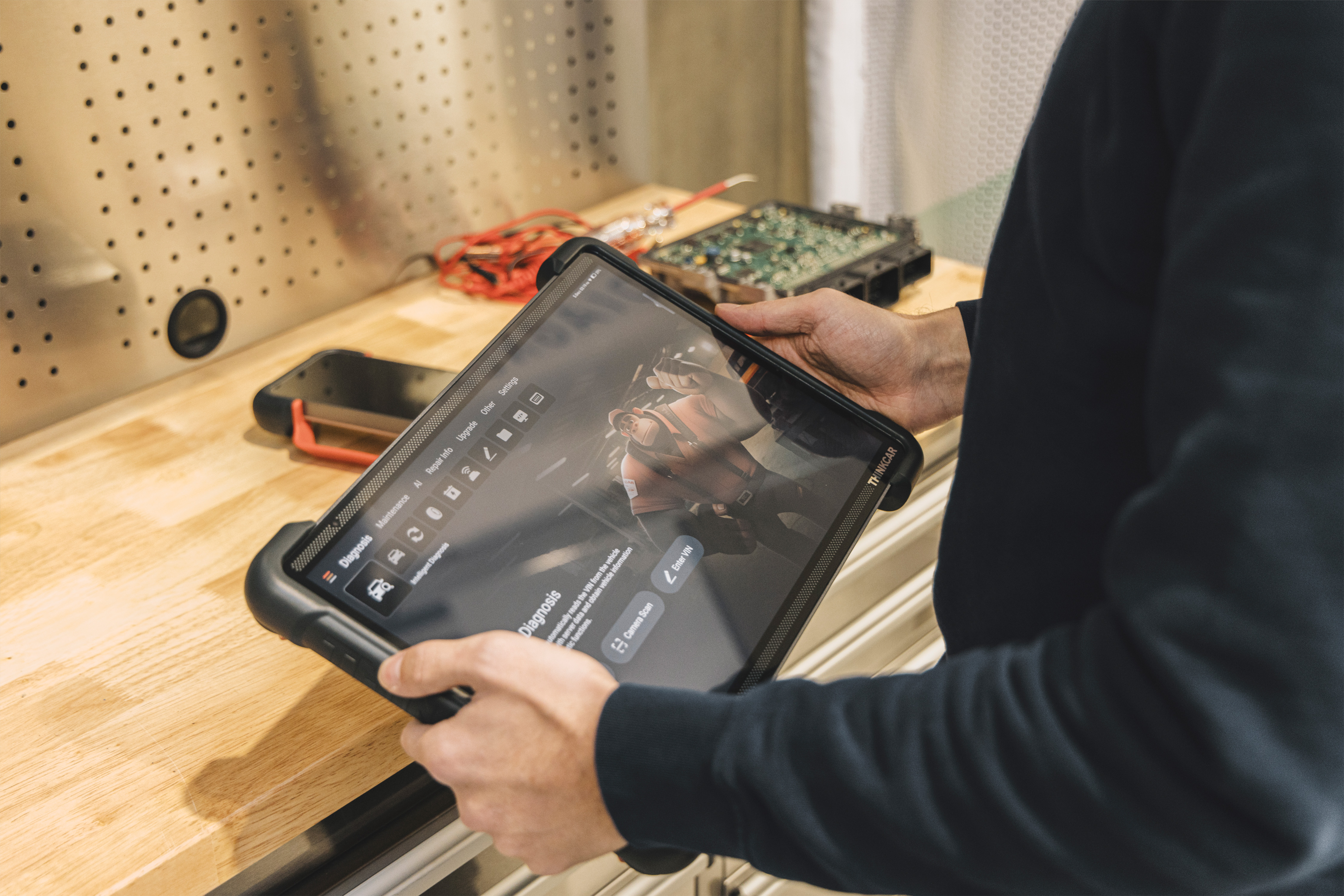
Diagnostic tools in 2025: what's new and what to look out for?
Discover the latest developments in diagnostic tools for the future. Learn what to look for when purchasing modern diagnostic testers and software for your garage.
The new standard in vehicle diagnostics
The modern car is a driving computer full of sensors, control units and data networks. Each component communicates with each other, and even the smallest error can affect the entire system.
It is therefore more important than ever for garages to work with the right diagnostic tools.
In 2025, reading fault codes is no longer enough. The latest diagnostic testers combine hardware, software and online connectivity into a single system. They analyze, program, calibrate and communicate with multiple vehicle systems simultaneously. Where older devices primarily told you what went wrong, modern tools help understand why something is going wrong.
Today's garage is no longer just a workshop but a technology center. A good diagnostic tester is the heart of that digital shop floor.
Technology that thinks with you
Next-generation diagnostic tools think with the technician. They connect to online databases and cloud environments, where they can access up-to-date information, technical manuals and software updates. This enables faster fault detection and resolution.
More and more manufacturers are using artificial intelligence within their diagnostic tools. The software recognizes patterns in fault codes and readings and suggests the most likely cause based on those patterns. This makes diagnosis not only faster but also more reliable, even for complex electronic problems.
Another development is wireless diagnostics. Where cables and interfaces used to be required, most modern tools now work via Bluetooth or WiFi. This makes the work clearer and gives technicians more freedom of movement in the workshop.
Ready for electric and hybrid vehicles
The boom in electric and hybrid vehicles is changing the way garages work. Maintenance of these cars requires specific knowledge and equipment.
Diagnostic tools in 2025 therefore come standard with features for high-voltage systems, battery diagnostics and charging systems.
The latest devices can measure insulation values, monitor battery modules and display live data from the battery management system. This helps detect problems early, even before they lead to failures or reduced performance.
A classic diagnostic tester without EV support is quickly becoming obsolete. The future lies with devices that work just as well on gasoline and diesel vehicles as they do on hybrid and electric models.
Integration with ADAS and safety systems
Safety systems are also becoming increasingly important in modern vehicles. Features such as lane assistance, emergency braking assistance and adaptive lighting fall under ADAS, or Advanced Driver Assistance Systems.
After repairs to the suspension, body or windshield, these systems must be recalibrated.
By 2025, better diagnostic tools can communicate directly with ADAS calibration equipment. They will guide the technician step by step through the process and automatically record the results. This saves time and prevents errors that could lead to unsafe situations.
For garages that do a lot of alignment or damage repair work, this is an important asset. A well-integrated diagnostic tool makes the difference between guessing and exact measurement.
Data, cloud and predictive maintenance
The cloud is playing an increasing role in vehicle diagnostics. Measurements, fault codes and test results are automatically stored and linked to the vehicle. This creates a digital maintenance archive that is always available.
The next step in this evolution is predictive maintenance. Diagnostic tools compare measured values with historical data and can indicate when a component will soon need maintenance. This allows a garage to inform customers in time and avoid unplanned downtime.
For fleet managers and larger workshops, this offers huge advantages. Multiple vehicles can be monitored simultaneously and abnormalities are automatically reported. Diagnosis thus becomes not only reactive, but also preventive.
What to look for when buying a diagnostic tool
When choosing a new diagnostic tool, it's not just about price. Pay particular attention to functionality, software coverage and reliability.
Check that the device is compatible with the brands you most often have in your workplace. Also look at the frequency of software updates, because a device that doesn't stay up-to-date quickly loses value.
Ease of use is also important. A clear interface and fast processing time save precious minutes per diagnosis. In addition, technical support is indispensable. A vendor that guarantees maintenance, updates and service prevents downtime in your workshop.
Finally, it is good to think about the future. Some systems can be expanded with modules for ADAS calibration or battery measurements. That way, your equipment grows with technology.
Automotics delivers the latest generation of diagnostic tools
At Automotics, you'll find diagnostic tools that are totally ready for the future. We provide professional multi-brand diagnostic testers, ADAS calibration systems, OEM programming interfaces and high-voltage equipment for electric vehicles.
Our products are carefully selected for quality, stability and support. They offer comprehensive brand coverage, regular software updates and intuitive operation. This allows technicians to work efficiently and resolve complex malfunctions faster.
Our experienced sales team will help you choose the right devices for your workshop. Whether you work on classic engines, hybrid vehicles or fully electric cars, you'll find the right solution at Automotics.
Visit our webshop and discover our latest diagnostic tools that prepare your garage for tomorrow's technology.